News

Health and safety statistics 2015/2016

9th November 2016

Key Health & Safety Statistics for Great Britain (2015/2016) 1.3 million working people suffering from a work-related illness 2,515 mesothelioma deaths due to past asbestos exposures (2014) 144 workers killed at work 72,702 other injuries to employees reported under RIDDOR 621,000 injuries occurred at work according to the Labour Force Survey 30.4 million working days lost due to work-related illness and workplace injury £14.1 billion estimated cost of injuries and ill health from current working conditions (2014/15) Source – http://www.hse.gov.uk/statistics/?ebul=hsegen&cr=1/04-nov-16
Resuscitation Guidelines 2015

3rd December 2015

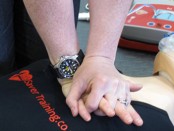
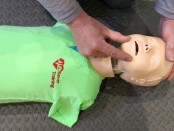
The Resuscitation 2015 guidelines contain detailed information about basic and advanced life support for adults, paediatrics and the newborn. Also included are guidelines for the use of Automated External Defibrillators and other related topics. The Resuscitation Council (UK) guidelines have been adapted from the 2015 ERC Guidelines and are tailored specifically to clinical practice in the UK. From UK Resuscitation Council Guidelines There are three key changes: 1.    ‘Shouting for help’ is no longer a step to be taught on it s own. The guidelines now state that the first aider should ‘ask someone to call 999/112’ after checking for normal breathing. 2.    When calling 999/112, activate speaker function on phone to communicate with dispatcher. 3.    Emphasis on seizure like episodes should not be confused [More…]

Dept of Education on Paediatric First Aid

3rd April 2015

On 12 March, the Childcare Minister Sam Gyimah announced proposals to make it a requirement that newly qualified early years staff (with a level 2 or level 3 childcare qualification) will have to have a paediatric first aid or emergency paediatric first aid certificate before they can be included in the required adult: child ratios in an early years setting. This proposal will be subject to consultation after the election, but it is expected that this change will take effect from September 2016.  There will also be a new special award – to be known as ‘Millie’s Mark’ – to be displayed by nurseries who have achieved gold-standard paediatric first aid provision.  Early years providers will also be able to take advantage of a scheme [More…]

The HSE Welcomes Defibrillator Awareness Training

31st March 2015

In-depth training in the use of automated external defibrillators (AEDs) is not currently part of either the Emergency First Aid at Work and First Aid at Work courses.  However, HSE welcomes the presence of awareness training in these courses as it instils greater confidence in the use of AEDs. It is not compulsory for employers to purchase AEDs to comply with the Health and Safety (First-Aid) regulations 1981.  However, if your needs assessment identifies an AED need then the HSE recommend your staff should be fully trained in its use. The Resuscitation Council UK guidance on AEDs is that this equipment is safe to use and can be readily used by untrained bystanders. AEDs are becoming more prevalent within the wider community.  For example there [More…]

10 Signs You May Have Kidney Disease

18th March 2015

More than 26 million American adults are living with kidney disease. Most don’t know it — Over 90 percent of people with signs of kidney disease are unaware of it. March is National Kidney Month, and one of the best ways to observe this health awareness month is by getting tested if you’re at risk for kidney disease. Major risk factors include high blood pressure, diabetes, a family history of kidney failure and being age 60 or older. While the only way to know for sure if you have kidney disease is to get tested, there are a number of physical signs. Sometimes people attribute these physical symptoms of kidney disease to other conditions. This is because those with kidney disease tend not to experience [More…]

1 3 4 5 6 7 14